
Not All Insulated Panels Are the Same: PU vs PIR Explained
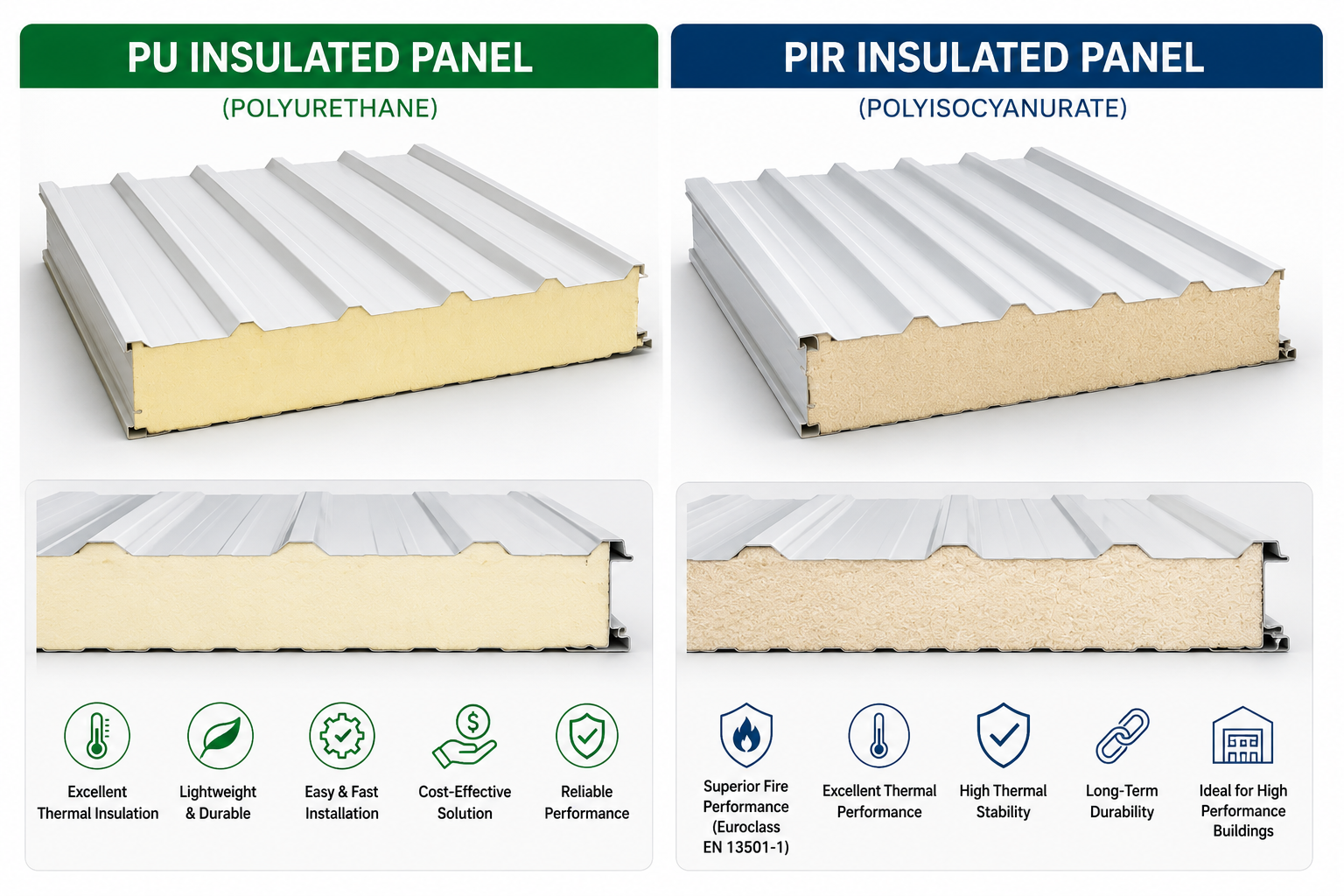
PU vs PIR Insulated Panels
What’s the Difference and Which One Should You Choose?
In today’s construction industry, energy efficiency, thermal performance, and long-term durability are no longer optional — they are essential. Whether you are building a warehouse, factory, cold storage facility, commercial building, or modern industrial plant, choosing the right insulated panel system can significantly impact operating costs, comfort, and building performance.
At Atlas Manufacturing Corporation, we manufacture high-quality insulated roofing and wall panel systems designed to meet the growing demand for efficient and reliable building solutions in the Philippines.
Two of the most commonly used insulation cores today are PU (Polyurethane)and PIR (Polyisocyanurate) insulated panels. While they may look similar from the outside, their performance characteristics differ in important ways.
What is PU Insulated Panel?
PU stands for Polyurethane Foam. PU insulated panels are known for their excellent thermal insulation properties, making them highly effective in reducing heat transfer and maintaining cooler indoor temperatures.
Key Advantages of PU Panels
Superior thermal insulation
Lightweight construction
Energy-efficient performance
Faster installation
Reduced cooling costs
Smooth and clean finish
PU panels are widely used in tropical climates like the Philippines because they help reduce indoor heat gain and lessen air-conditioning loads.
Best Applications for PU Panels
Warehouses
Commercial roofing
Office buildings
Poultry farms
General industrial buildings
What is PIR Insulated Panel?
PIR stands for Polyisocyanurate Foam. PIR panels are an advanced version of polyurethane insulation with enhanced fire-resistant properties and improved thermal stability.
While PIR offers similar insulation performance to PU, its biggest advantage is its improved behavior under high temperatures and fire exposure.
Key Advantages of PIR Panels
Enhanced fire performance
Excellent thermal insulation
Higher temperature resistance
Improved structural stability
Long-term durability
Better compliance for stricter building requirements
Best Applications for PIR Panels
Cold storage facilities
Food manufacturing plants
Pharmaceutical facilities
High-specification industrial buildings
Projects with stricter fire requirements
